easysnowdata.climate.indices.seasonal_mean#
- easysnowdata.climate.indices.seasonal_mean(obj: Dataset | DataArray | Series | DataFrame, months: tuple[int, ...] = (11, 12, 1, 2, 3), *, hemisphere: str = 'northern', min_months: int | None = None) DataFrame[source]#
Average each index over months, one row per water year.
The default, November-March, is the accumulation season most snowpack teleconnection studies use. Months are assigned to the water year they fall in (
easysnowdata.processing.wateryear.water_year()), so a December-February window is one row, not two.- Parameters:
obj – The output of
load(), one of its variables, or a pandas Series/DataFrame on aDatetimeIndex.months – Calendar months to average.
hemisphere – Water-year convention (
"northern"starts in October).min_months – Years with fewer valid months than this are NaN (default: all of months, so a season still in progress is not reported).
- Returns:
pandas.DataFrame– Indexwater_year; one column per index.
Examples using easysnowdata.climate.indices.seasonal_mean#
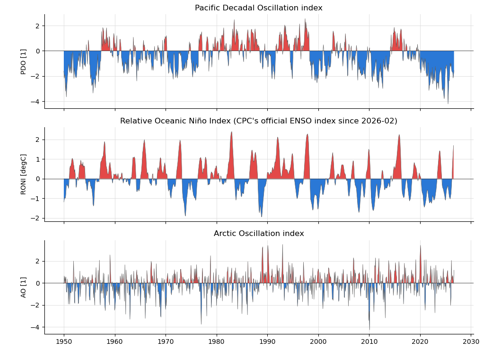
Climate-mode indices: PDO, ENSO, AO (NOAA NCEI / CPC / PSL)