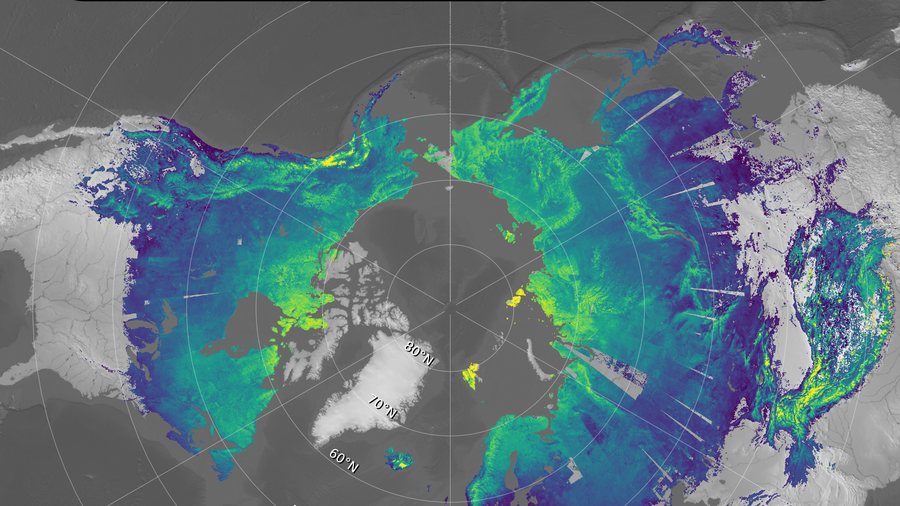
Global snowmelt runoff onset from Sentinel-1 SAR
A 10-year (2015–2024), 80-meter resolution global dataset of annual mountain snowmelt onset timing derived from ~3.9 million Sentinel-1 SAR scenes.

Postdoctoral Scholar, Terrain Analysis and Cryosphere Observation Lab
University of Washington
Remote sensing · Cryosphere · SAR
I'm a postdoctoral researcher at UW CEE's Terrain Analysis and Cryosphere Observation Lab, with a research focus on understanding when and where mountain snowmelt occurs — a critical question for the more than one billion people who depend on seasonal snowpack for freshwater. I graduated from UW with my PhD in December 2025, and my dissertation work combined satellite radar remote sensing with large-scale cloud computing to produce the first global, high-resolution record of snowmelt runoff onset timing, processing ~3.9 million Sentinel-1 C-band SAR scenes at 80-meter resolution from 2015 to 2024. This dataset enabled a systematic analysis of elevation, aspect, and temperature controls on snowmelt timing patterns across ~150 mountain ranges.
As a postdoc, I'm continuing to work on snowmelt phase delineation and wet snow detection, and I'm developing and evaluating snowmelt methods that leverage data from NASA's newly launched NISAR L-band SAR mission. I'm also building scalable, automatically-updating geospatial data pipelines using emerging tools like Icechunk and GitHub Actions. Alongside research, I develop and maintain open-source Python tools to make snow-related geospatial datasets more accessible to the broader community. I'm also passionate about teaching! I was the instructor (and helped develop the curriculum) for UW's graduate level Geospatial Data Analysis in Python class twice and the TA for it twice, and also twice TA'd the graduate level Advanced Surveying and Geomatics. While I still love snow research, I hope to eventually transition to a public high school teaching role.
A 10-year (2015–2024), 80-meter resolution global dataset of annual mountain snowmelt onset timing derived from ~3.9 million Sentinel-1 SAR scenes.
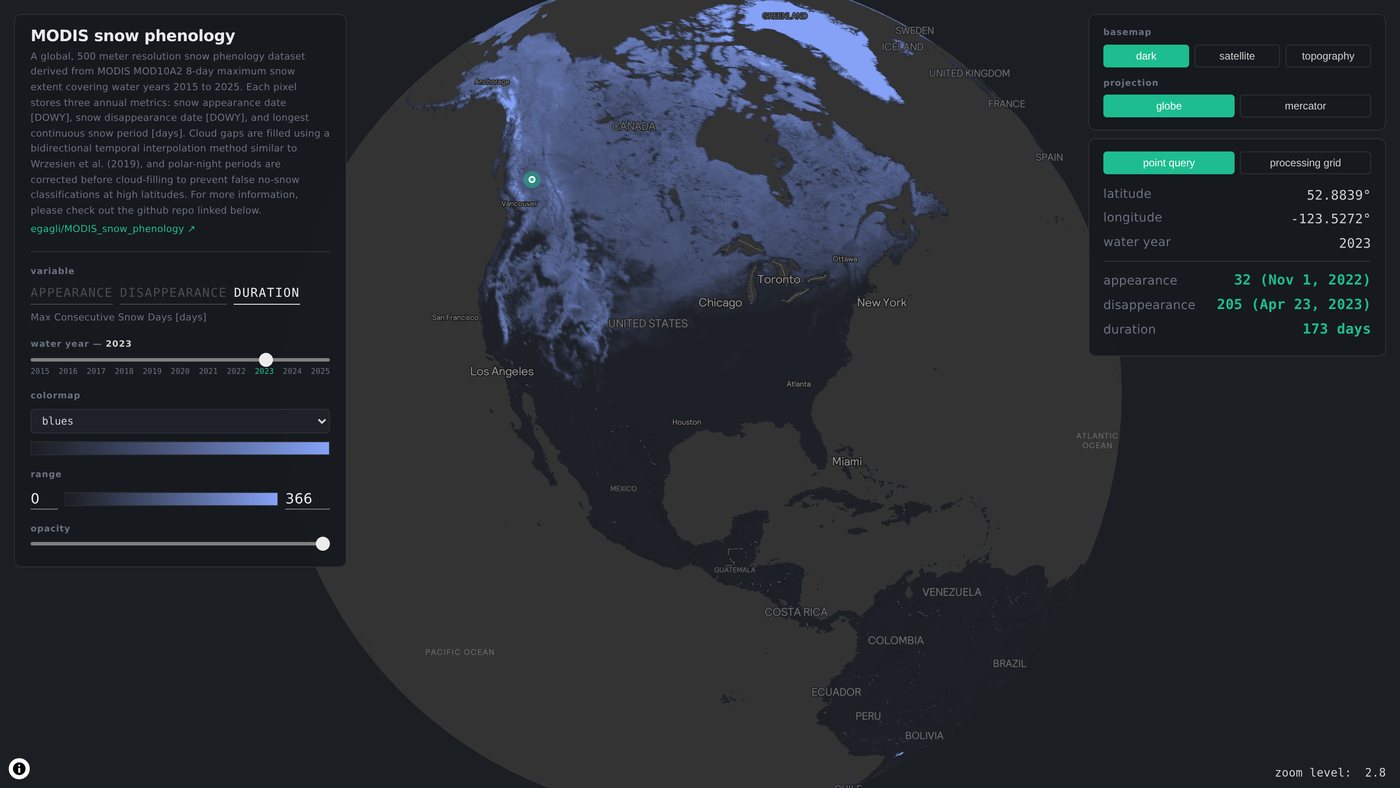
A global, 500-meter resolution snow phenology dataset derived from a decade (2015–2024) of MODIS 8-day maximum snow extent observations.
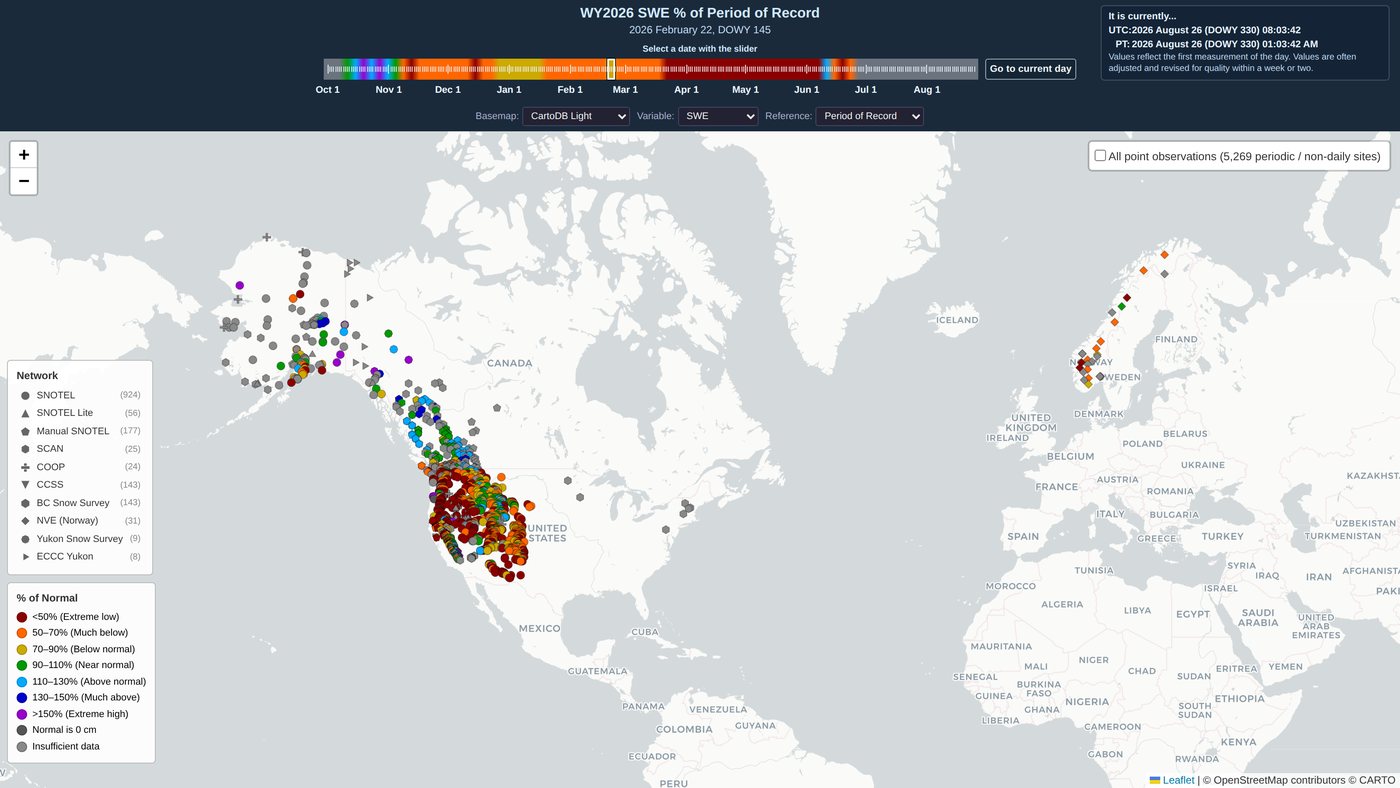
A python toolkit for retrieving snow measurements from automated snow networks with a live, data rich interactive map.
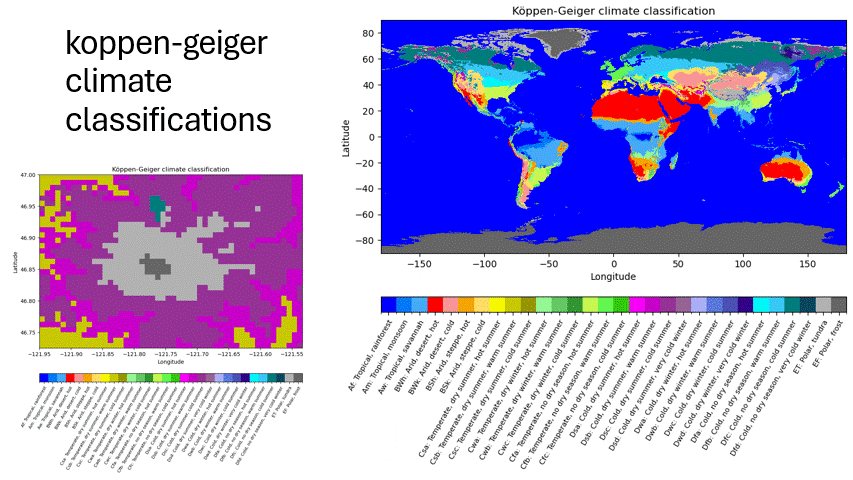
A Python package that makes it easy to access snow-related geospatial datasets.
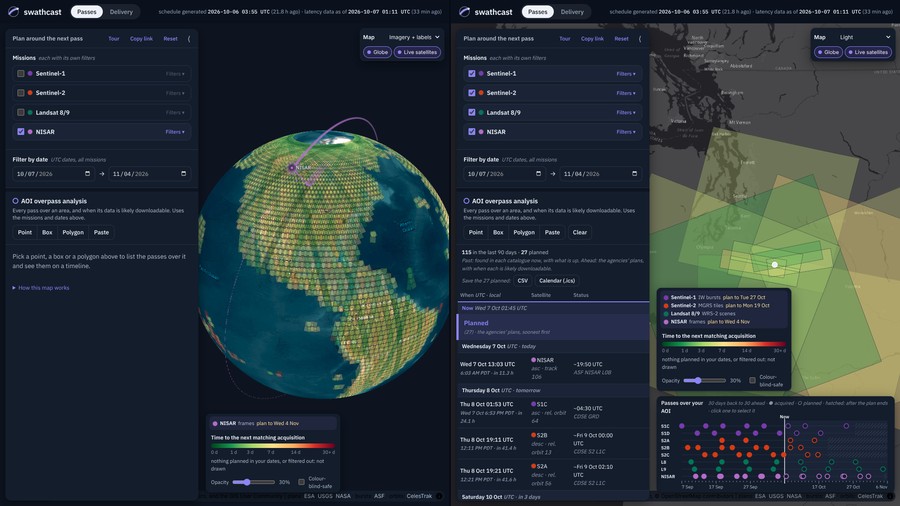
An interactive map of upcoming Sentinel-1, Sentinel-2, Landsat 8/9, and NISAR acquisitions from the agencies' own plans, with measured delivery latency showing when each pass will be ready to download.
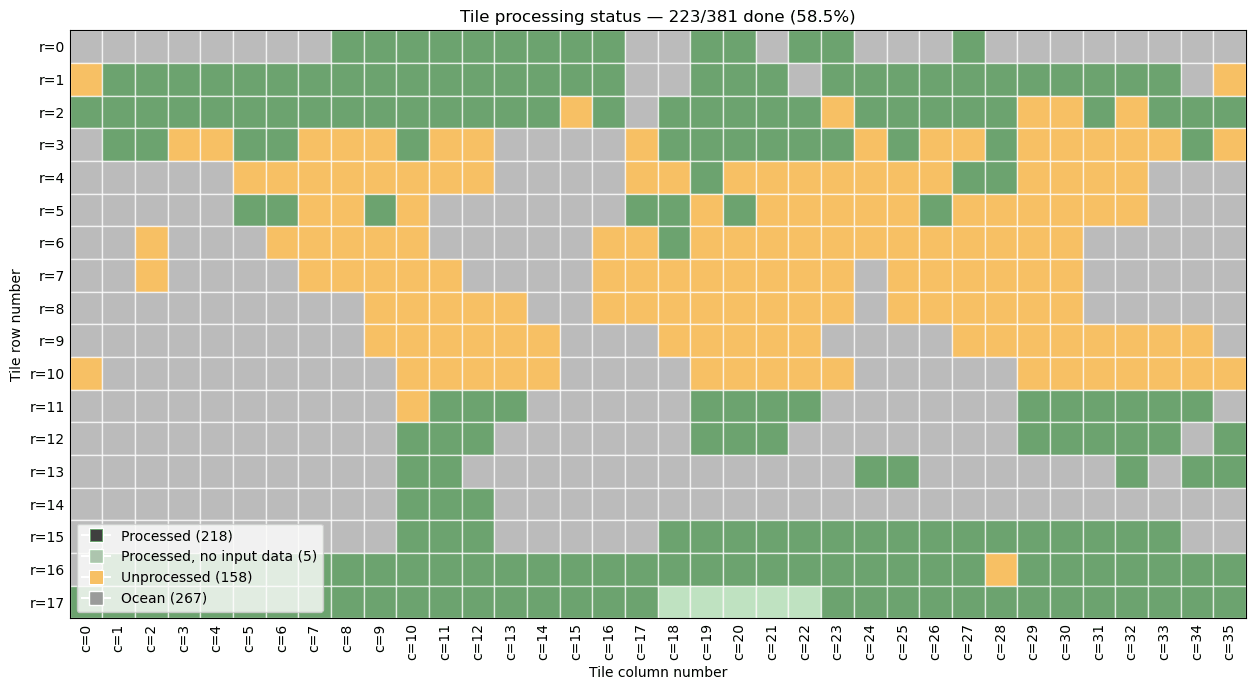
Building a global-scale raster dataset with GitHub Actions for parallel compute and Icechunk for versioned, conflict-free Zarr storage.
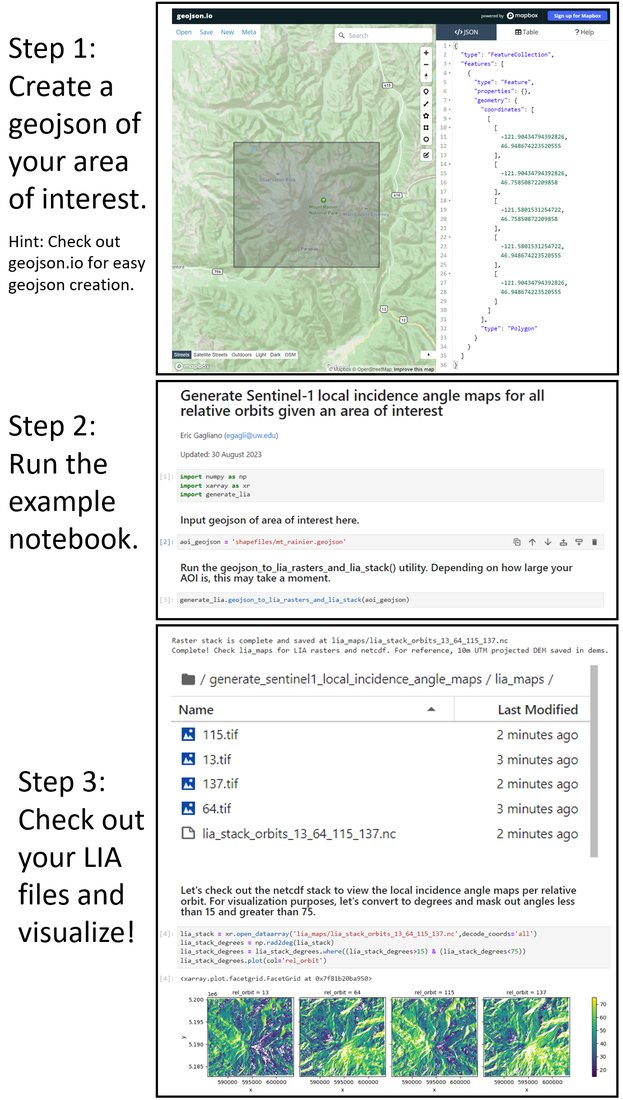
Tool for generating local incidence angle maps for Sentinel-1 SAR.

Open-access geospatial data analysis course materials for CEE 467/CEWA 567 at UW, which I've helped build. I was the instructor in Winter 2024 [Teaching evaluation] and Winter 2025 [Teaching evaluation], and TA'd this class Winter 2022 and Winter 2023.

Global patterns and controls on mountain snowmelt runoff onset from a decade of high-resolution observations

Improved Mapping of Snowpack with Joint Assimilation of Melt onset timing and Snow Disappearance Date – A Case Study in the Swiss Alps
Comparing Sentinel-1 SAR backscatter and process-based modeling for characterizing snowpack melt progression in the Sierra Nevada, California

Remotely sensed melt fraction enhances streamflow modeling in snow-dominated ungauged basins with long short-term memory networks
Hydrological Processes · preprint: 10.2139/ssrn.6675822

Accurate snow depth predictions across the Western U.S. using a deep learning model trained on 7 years of airborne lidar snow depth measurements
A global high-resolution dataset of snowmelt runoff onset timing from Sentinel-1 SAR, 2015–2024
Earth System Science Data, 18(8), 5871–5894 · 10.5194/essd-18-5871-2026
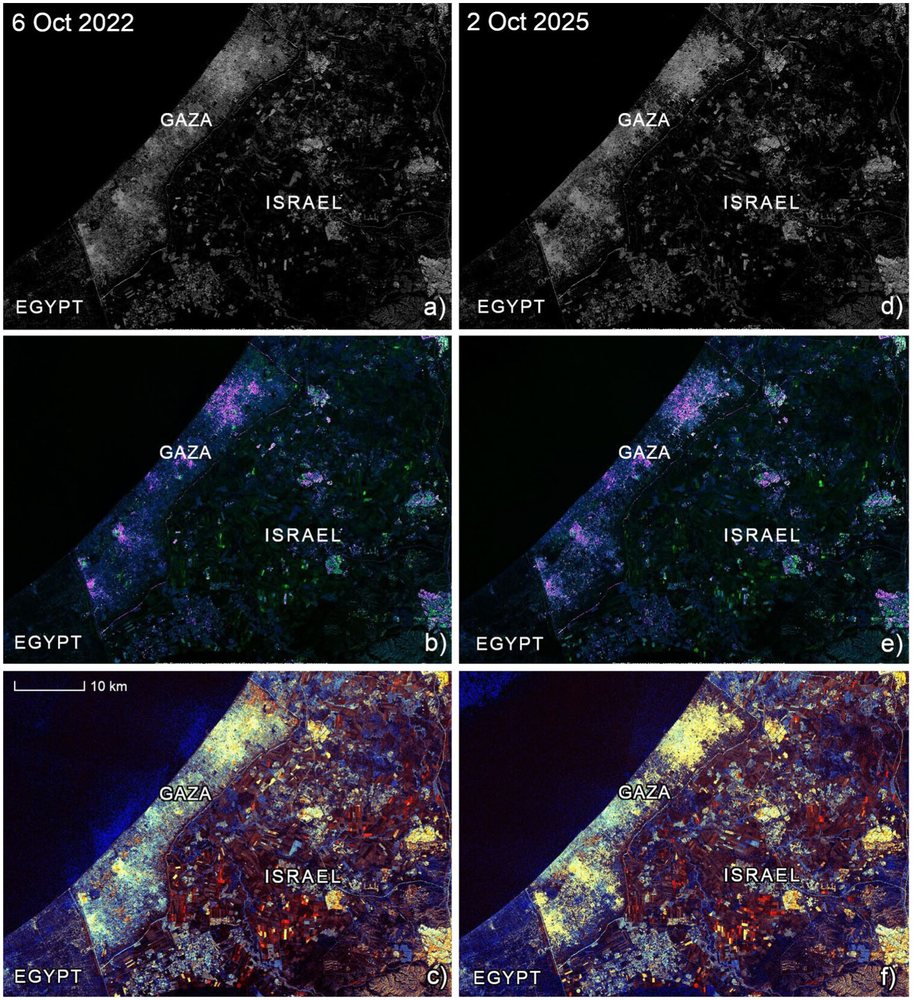
Breaker of images: Synthetic aperture radar and satellite iconoclasm
Environment and Planning F (online first) · 10.1177/26349825261456297
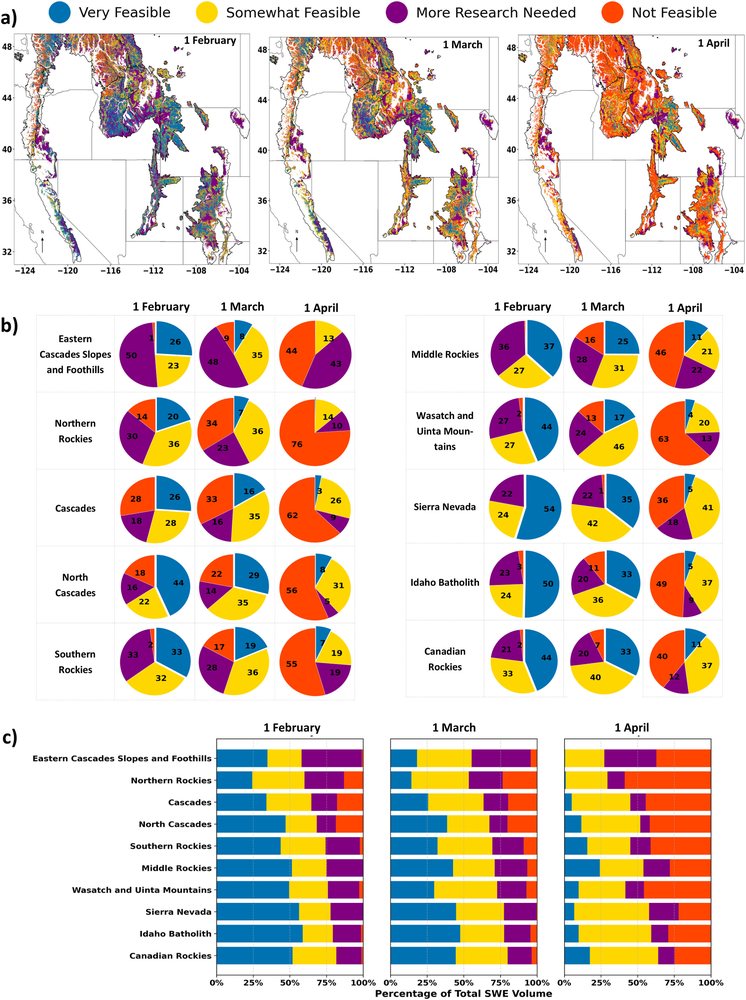
Feasibility mapping of L-band InSAR for SWE retrievals across the Western United States
Geophysical Research Letters, 53(10), e2025GL120162 · 10.1029/2025GL120162
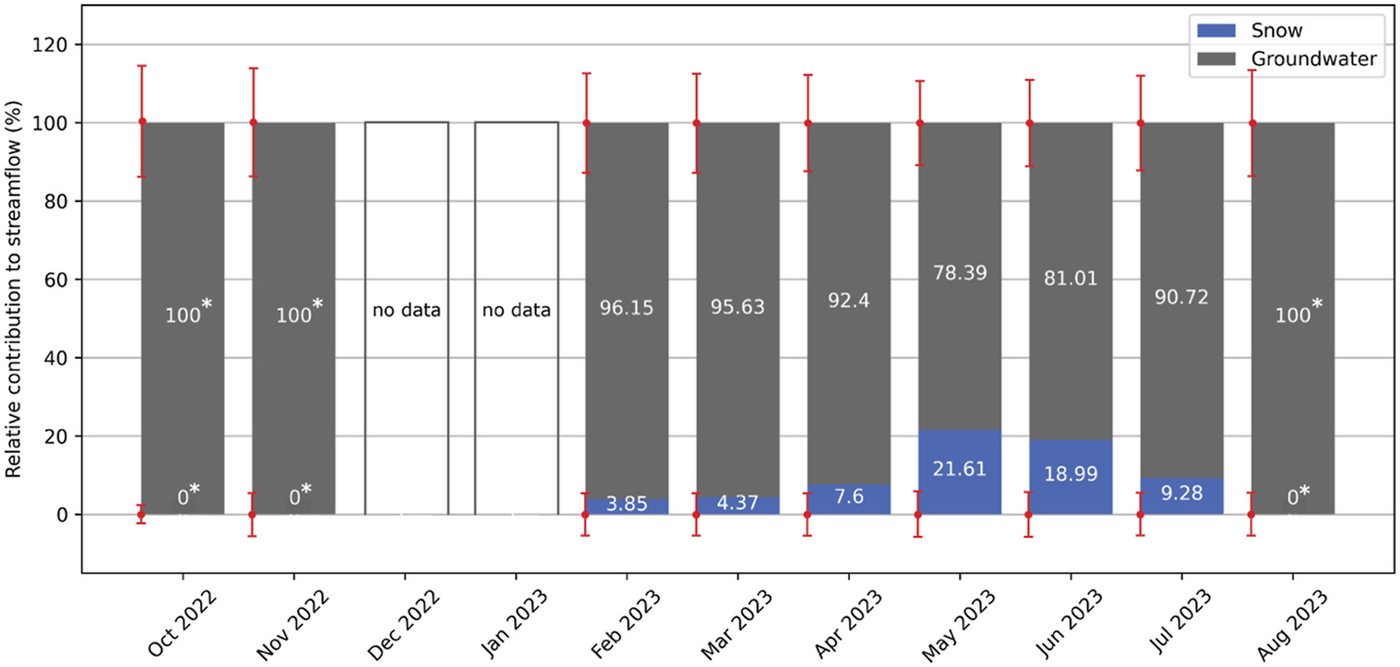
When and where does water originate? Leveraging stable water isotopes and synthetic aperture radar to assess the hydrology of a snow-dominated watershed in southwestern Montana
Remote Sensing Applications: Society and Environment, 41, 101887 · 10.1016/j.rsase.2026.101887
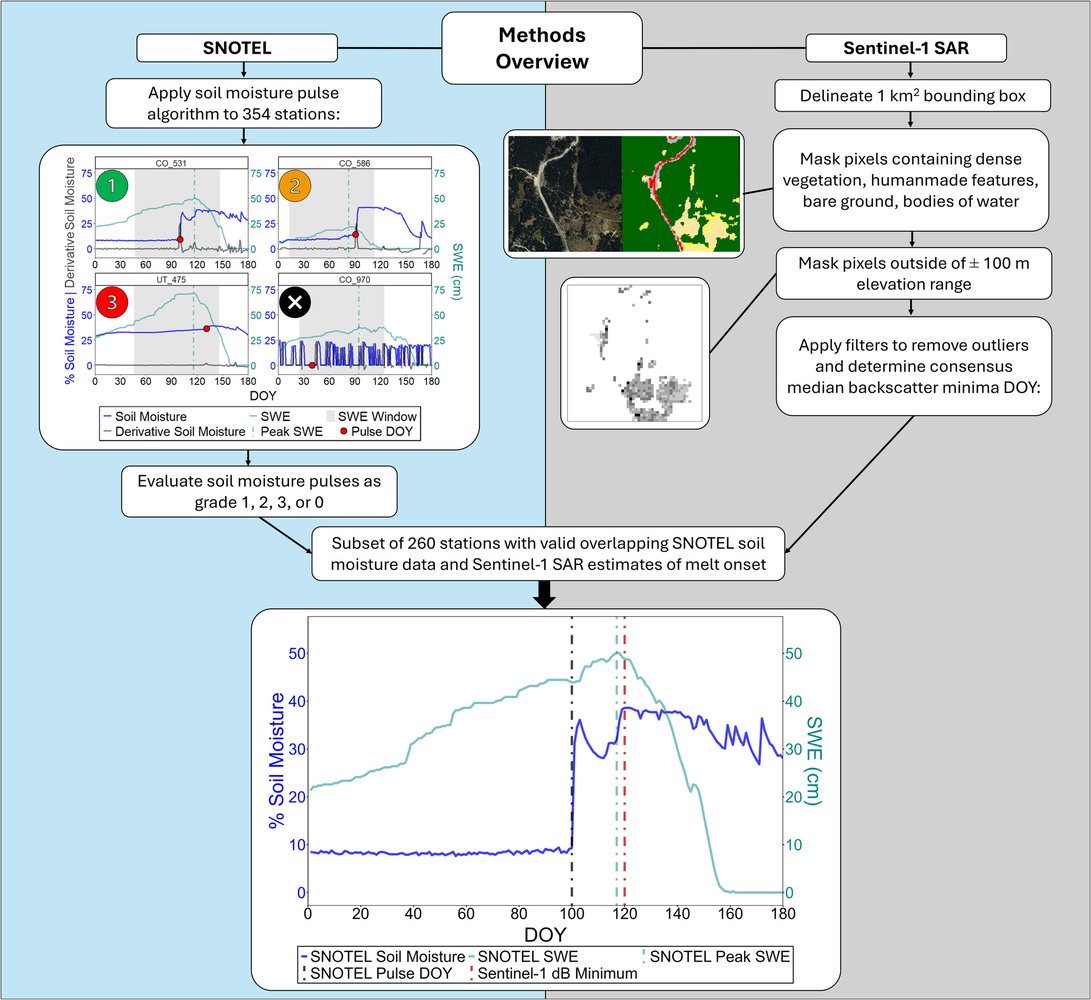
Sentinel-1 SAR estimates of snowmelt onset coincide with SNOTEL soil moisture pulses across the Western United States
Hydrological Processes, 39(12), e70341 · 10.1002/hyp.70341
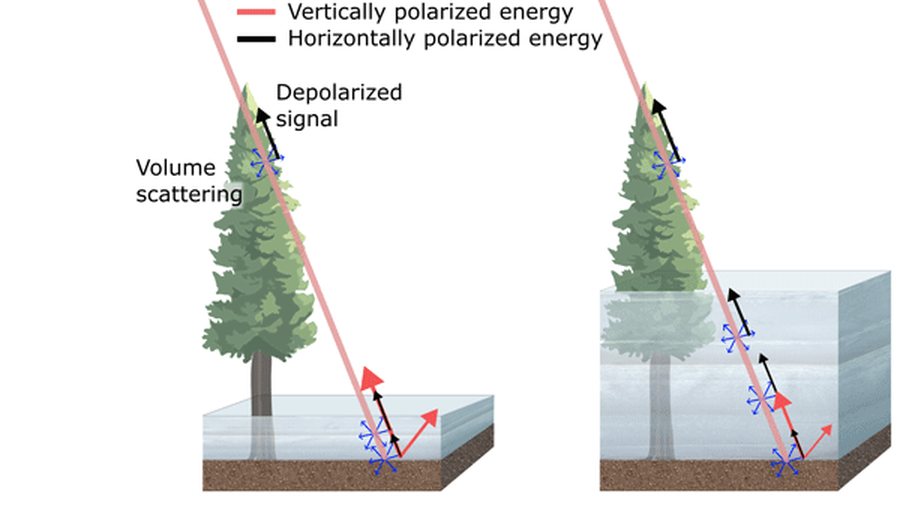
Evaluating snow depth retrievals from Sentinel-1 volume scattering over NASA SnowEx sites
The Cryosphere, 18(11), 5407–5430 · 10.5194/tc-18-5407-2024
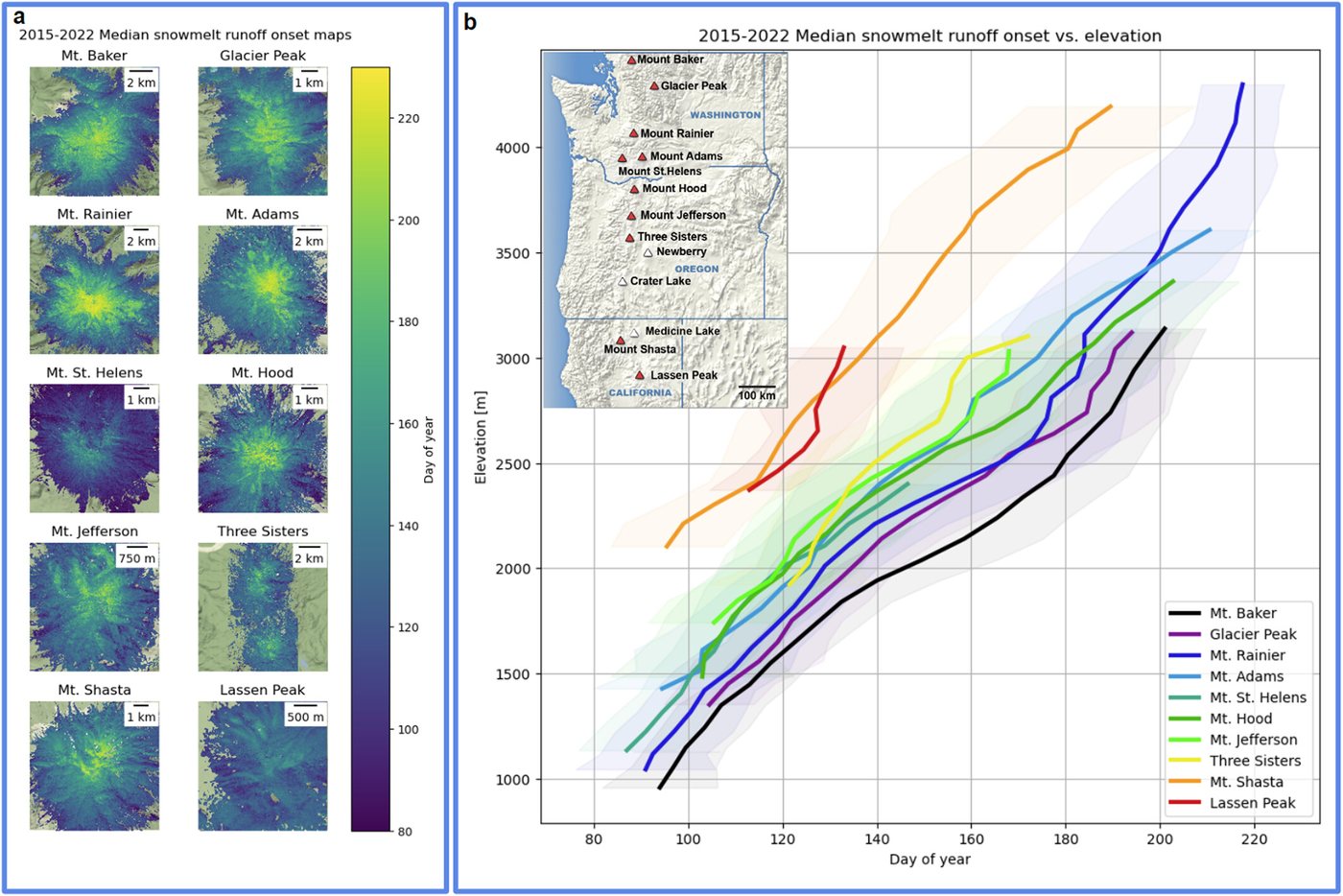
Capturing the onset of mountain snowmelt runoff using satellite synthetic aperture radar
Geophysical Research Letters, 50(21), e2023GL105303 · 10.1029/2023GL105303
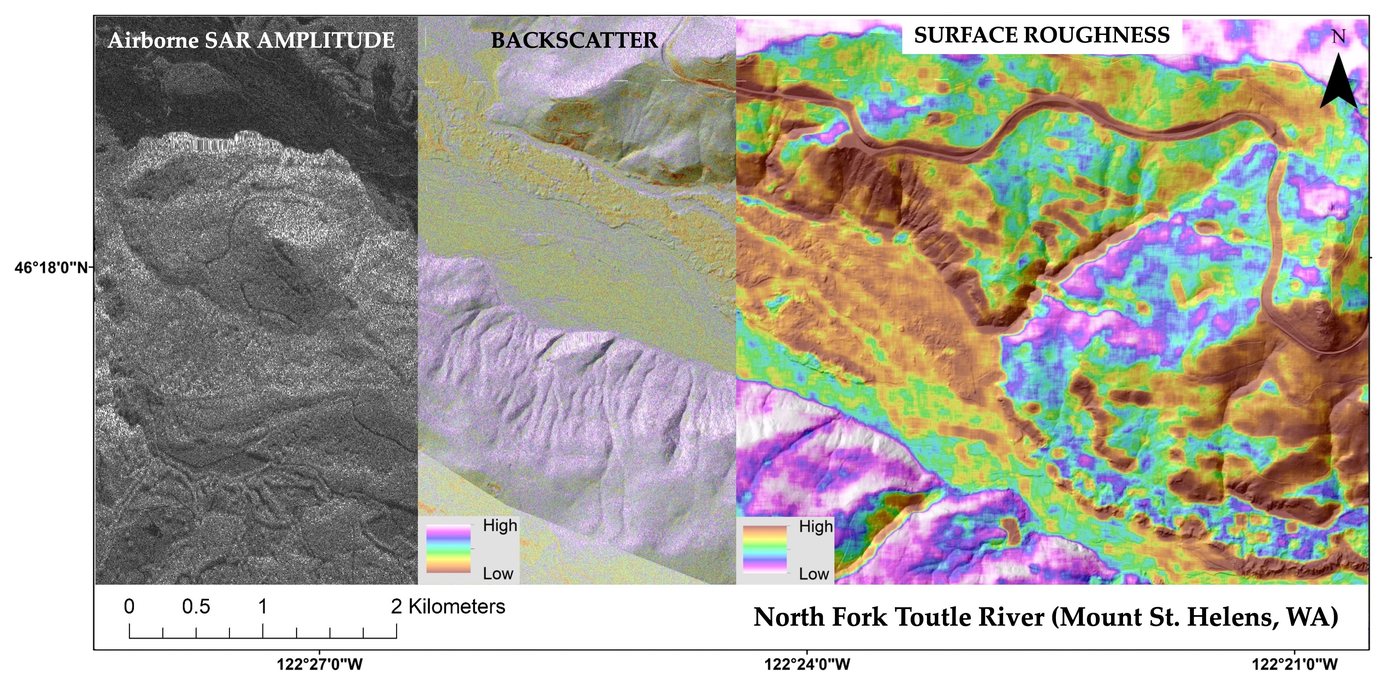
Characterizing and mapping volcanic flow deposits on Mount St. Helens via dual-band SAR imagery
Remote Sensing, 15(11), 2791 · 10.3390/rs15112791